Engineered in house
Specification, drafting, modelling and analysis are produced by our own engineers before anything is committed.

Product
We engineer and supply belt and screw conveyors for bulk material handling, sized by our engineers around the material being moved, the tonnage required and the geometry of the plant the machine has to fit. Complete systems and individual replacement components are both supplied.
Overview
A conveyor selection begins with the material, not the machine. Bulk density, particle size, moisture content, abrasiveness and flow behaviour decide the trough profile, the flight geometry, the belt construction and the speed at which the unit can run without spilling, bridging or wearing out early. Our engineers establish those parameters first and size the drive, the supports and the wear parts against them.
Two families cover the great majority of bulk handling duty. Belt conveyors move high tonnage over distance and through gradients. Screw conveyors provide fully enclosed transfer with controlled feed rates inside a small footprint. We supply both, together with the loose components needed to maintain what is already installed.
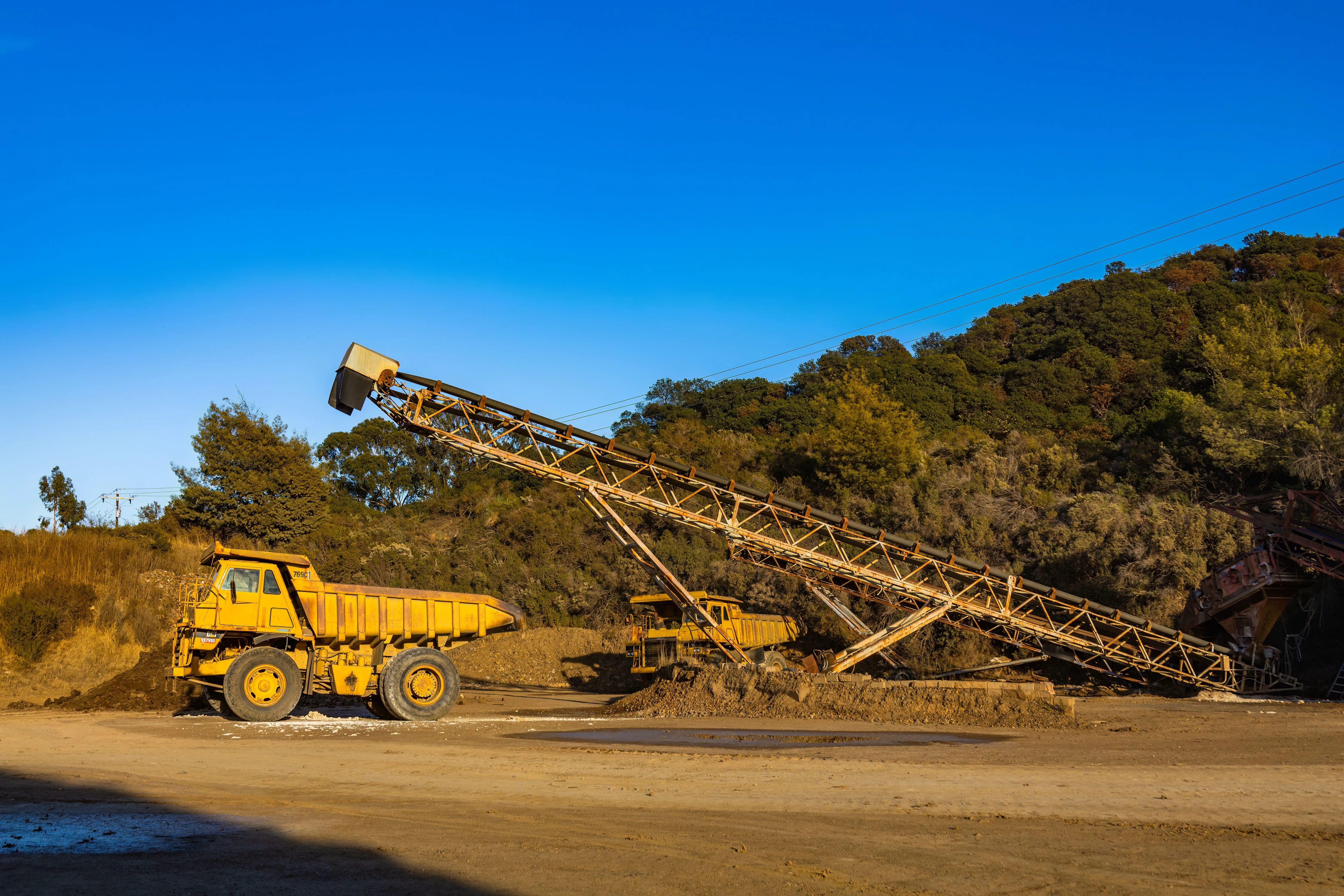
A screw conveyor is rated by how full the trough runs, and the correct figure depends entirely on what is inside it. Free flowing granular material tolerates a high fill. Wet, stringy and sticky material does not, because it packs against the hanger bearings and loads the drive. We size shafted units at around thirty percent trough loading on sludge duty and shaftless units at around forty five percent, since a shaftless spiral leaves the trough clear and can carry a deeper bed without bridging.
Single source delivery
Specification, drafting, modelling and analysis are produced by our own engineers before anything is committed.
Work is placed with the vendor partner in our production network equipped for that scope, to our tolerances and our schedule.
Quality control checks every item against the drawing, the specification and the applicable standard prior to despatch.
Status is published to your job portal for the life of the order, covering stage reached and whether the date holds.
Installation guidance, routine maintenance, troubleshooting and spare parts across the working life of the equipment.
Our range
Every conveyor is engineered and supplied to the duty, the drawing and the standard your project requires.
High tonnage transfer over distance and gradient, with the belt, the support arrangement and the drive selected against the load profile and the layout.
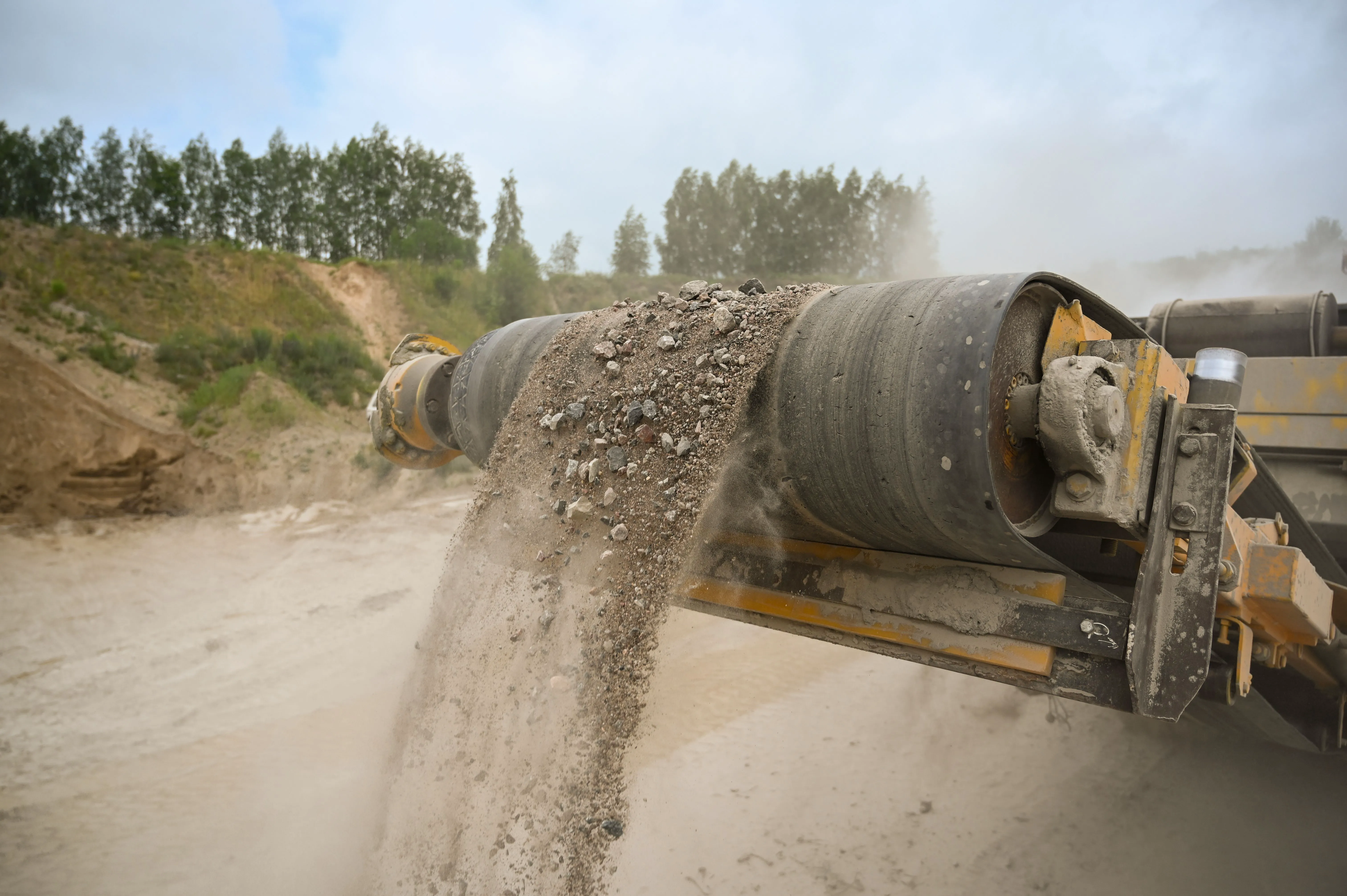
The standard arrangement for sustained duty over longer centres. The belt is carried on troughing idler sets that shape it into a contained profile, so material sits in the middle of the belt rather than working toward the edges. Rolling support keeps friction and drive power low, which is what makes this the economical choice once run lengths and tonnages increase. Return idlers support the underside, impact idlers absorb loading forces at transfer points and training idlers correct any tendency to wander.
| Specification | |
|---|---|
| Belt widths | 16, 18 and 24 inch |
| Troughing angle | 20 degrees |
| Orientation | Horizontal or inclined |
| Incline limit | Typically below 35 degrees |
| Idler types | Troughing, return, impact, training |
| Typical duty | Screenings, grit, dewatered cake |
The belt runs across a continuous solid bed faced with replaceable wear strips instead of rotating idlers. Support is uninterrupted along the whole length, removing the sag between idler sets where fine material escapes, and there are far fewer rotating parts to grease, align or replace. The trade off is higher friction against the bed, so this arrangement suits lighter loadings and shorter centres where the maintenance saving outweighs the additional drive demand.
| Specification | |
|---|---|
| Belt support | Continuous solid bed |
| Wear face | Replaceable UHMW strip |
| Run length | Short to medium centres |
| Typical duty | Fine and lightly loaded material |
| Maintenance | No idler sets to align or grease |

Used where the plant layout will not accommodate a straight run. The belt follows a profiled path that changes angle along its length, so one machine picks up at one elevation and discharges at another without an intermediate transfer point. Removing that transfer removes a chute, a drive, a dust source and a maintenance position. Transition geometry is set so belt tension and edge stress stay within limits through the change of angle.
| Specification | |
|---|---|
| Belt path | Profiled, changes angle in one run |
| Main benefit | Removes an intermediate transfer |
| Geometry | Set to available headroom and floor space |
| Loading point | Positioned to suit the layout |
| Discharge | Positioned to suit the layout |
| Typical use | Constrained and congested plant |
Fully enclosed transfer with controlled feed rate and a compact footprint, with flight design, trough and drive selected against material behaviour.
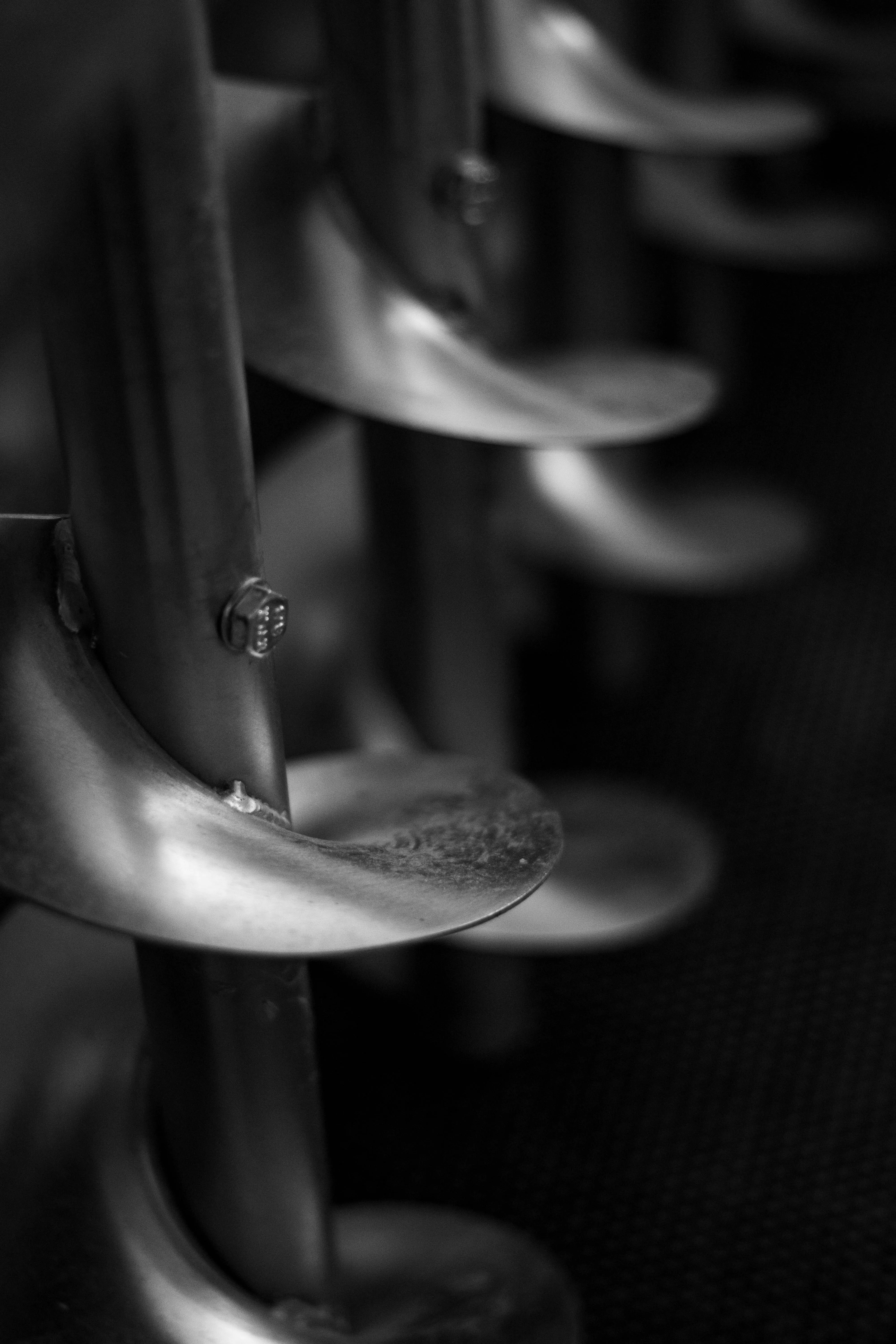
Helical flighting is welded to a central pipe and driven from one end, with hanger bearings supporting the assembly at intervals along the run. Carrying the flighting on a shaft holds it concentric within the trough, which limits contact wear and allows higher rotational speeds and longer conveyor lengths than an unsupported spiral. The arrangement suits dry, free flowing and granular material. It is less suited to fibrous or stringy material, which tends to collect at the hanger bearings.
| Specification | |
|---|---|
| Screw diameters | 6, 9, 10, 12, 14 and 16 inch |
| Trough loading | Approximately 30 percent on sludge duty |
| Support | Central pipe with hanger bearings |
| Materials | Carbon steel, AR steel, stainless steel |
| Options | Hardfacing on the flight edge |
| Typical duty | Dry, free flowing, granular material |
A heavy sectional spiral carries the load without a centre shaft or intermediate hanger bearings, leaving the trough bore completely unobstructed. Nothing crosses the material path, so fibrous, stringy and high moisture material passes through without wrapping or bridging. The spiral bears on a replaceable liner in the base of the trough, which is the designed wear surface and is changed in service. The absence of internal supports also allows a deeper material bed than a shafted unit of the same diameter.
| Specification | |
|---|---|
| Spiral diameters | 6, 9, 10, 12, 14 and 16 inch |
| Trough loading | Approximately 45 percent on sludge duty |
| Support | No centre shaft, no hanger bearings |
| Liner | Replaceable UHMW or composite |
| Materials | Carbon steel, AR steel, stainless steel |
| Typical duty | Cake, screenings, compost, pulp |
Component supply
Most conveyor downtime comes down to one worn item, so we supply parts individually as well as in complete machines, across every conveyor type in our range. Components follow CEMA dimensional standards where those standards apply, so they interchange with equipment already on your site whoever originally supplied it.
This list is not exhaustive. We supply a great many screw conveyor parts beyond those shown here, so ask our team for the item you need before assuming it is unavailable.
This list is not exhaustive either. Belt conveyor components run to many more items than can be listed on a page, so ask our team for the part you are chasing.
Send the machine, the component and the dimension, or a photograph of the worn part, and we will identify it and quote against it. Where a part is no longer available from the original supplier, our design office reverse engineers it from the sample and we have it produced.
The same engineering applied across the sectors that depend on it.
Get in touch
Tell us what you are moving, at what rate and along what path, and our engineers will size and specify the conveyor to suit it. For replacement parts, the component name and dimension are enough to start.