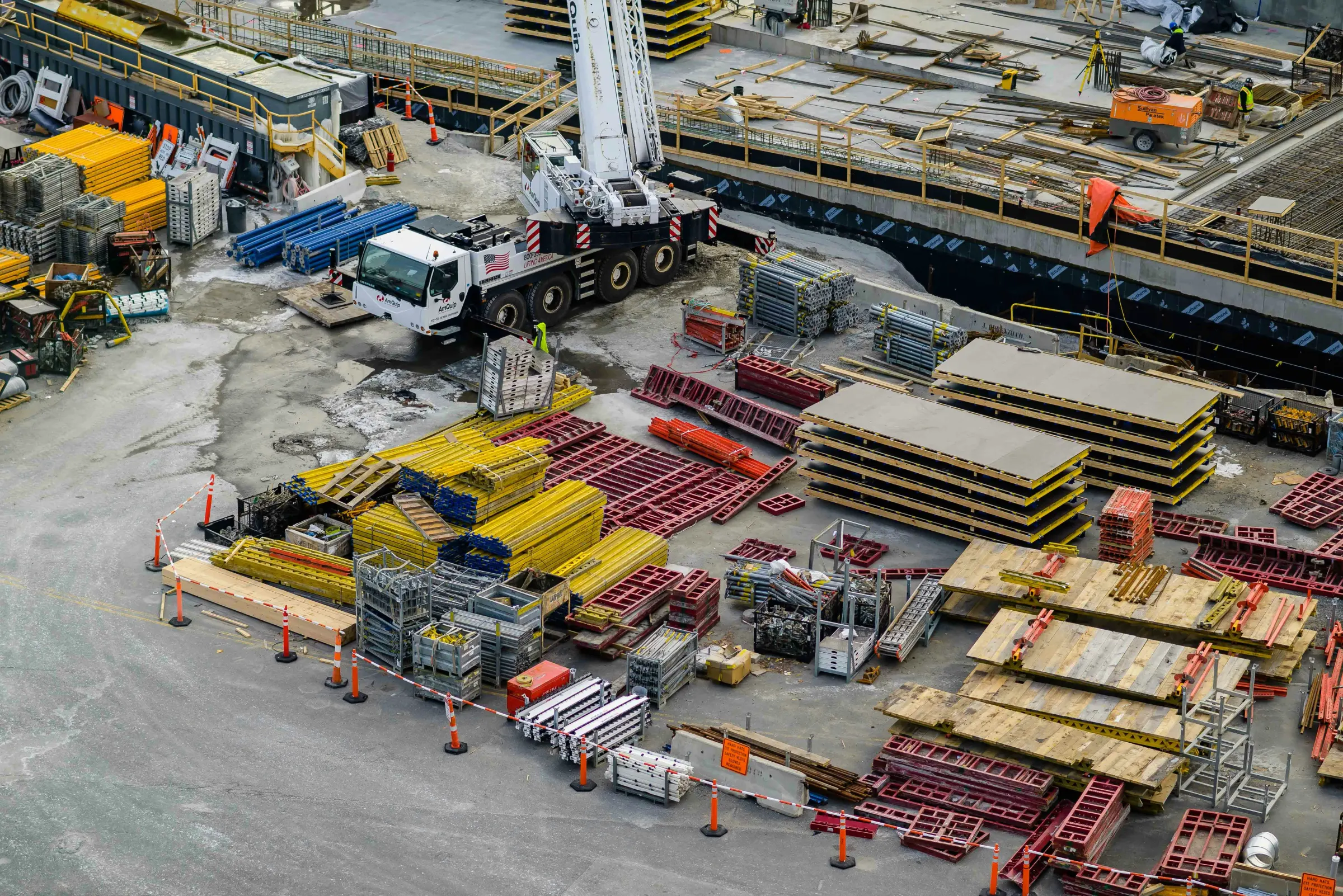
Engineered in house
Specification, drafting, modelling and analysis are produced by our own engineers before anything is committed.
Product
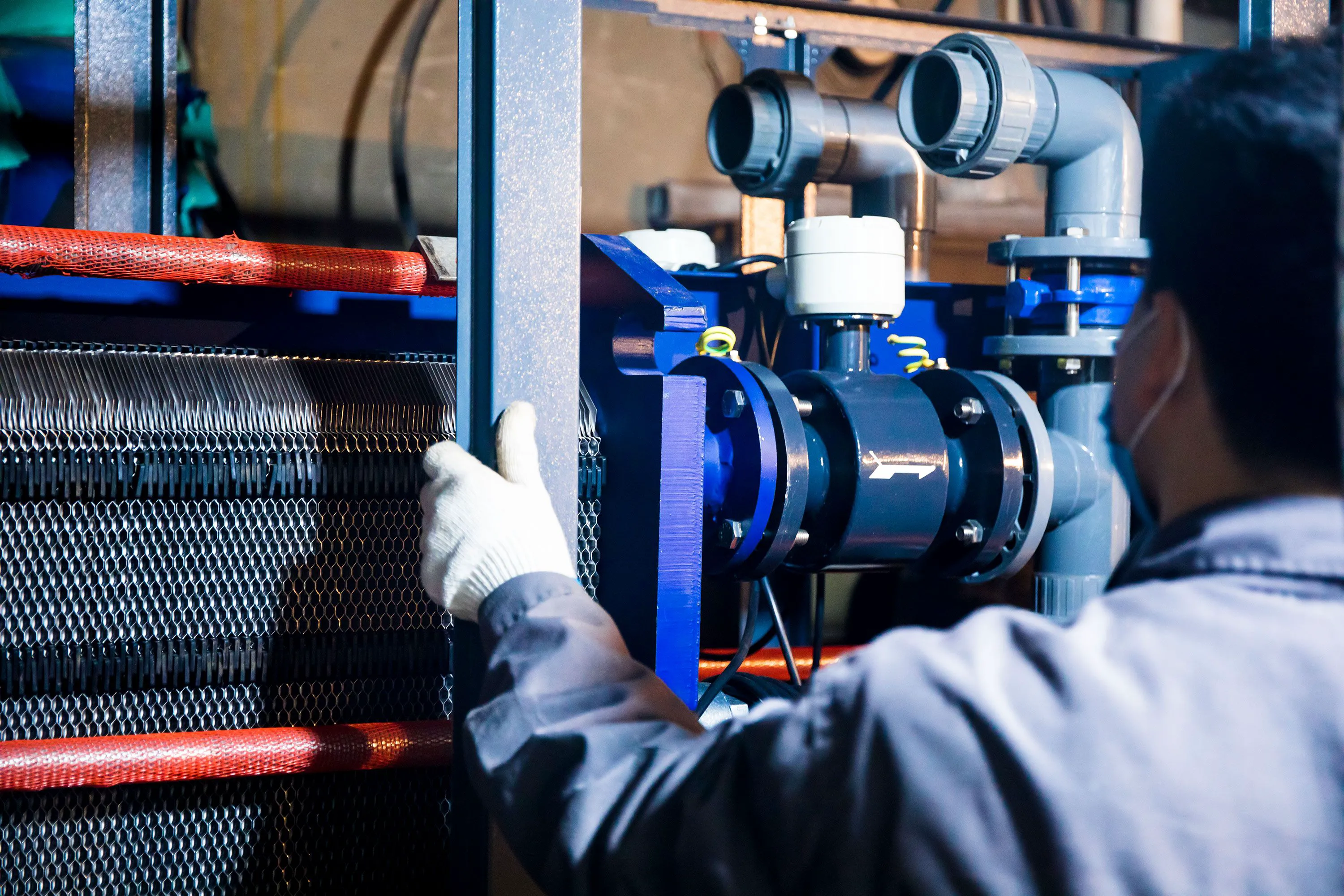
We supply complete sludge thickening and dewatering lines engineered to take thin sludge through to a dry, stackable cake, built on technology proven across municipal and industrial wastewater plants worldwide.
Overview
Every tonne of water left in sludge is a tonne that has to be pumped, hauled and paid to dispose of. Our equipment removes that water in stages, first concentrating the sludge to cut its volume, then pressing it into a firm cake that costs considerably less to transport and dispose of.
The line is built on two proven stages. Thickening raises the solids concentration and reduces volume before the sludge reaches the press, protecting downstream capacity. Belt filter pressing then drives the cake to maximum dryness. Both stages are engineered for high solids capture at low energy, polymer and wash water consumption.
Sending dilute sludge straight to a press is the most common and most expensive mistake in a dewatering line. Thickening is the cheapest volume reduction available, and every point of solids gained before the press raises cake dryness, cuts polymer demand and reduces the hydraulic load the press has to carry. The two stages are specified together for that reason.
Single source delivery
Specification, drafting, modelling and analysis are produced by our own engineers before anything is committed.
Work is placed with the vendor partner in our production network equipped for that scope, to our tolerances and our schedule.
Quality control checks every item against the drawing, the specification and the applicable standard prior to despatch.
Status is published to your job portal for the life of the order, covering stage reached and whether the date holds.
Installation guidance, routine maintenance, troubleshooting and spare parts across the working life of the equipment.
Our range
Every unit is engineered and supplied to the sludge, the duty and the standard your plant requires.
The first and most cost effective step in volume reduction, concentrating dilute sludge before it reaches the dewatering stage.
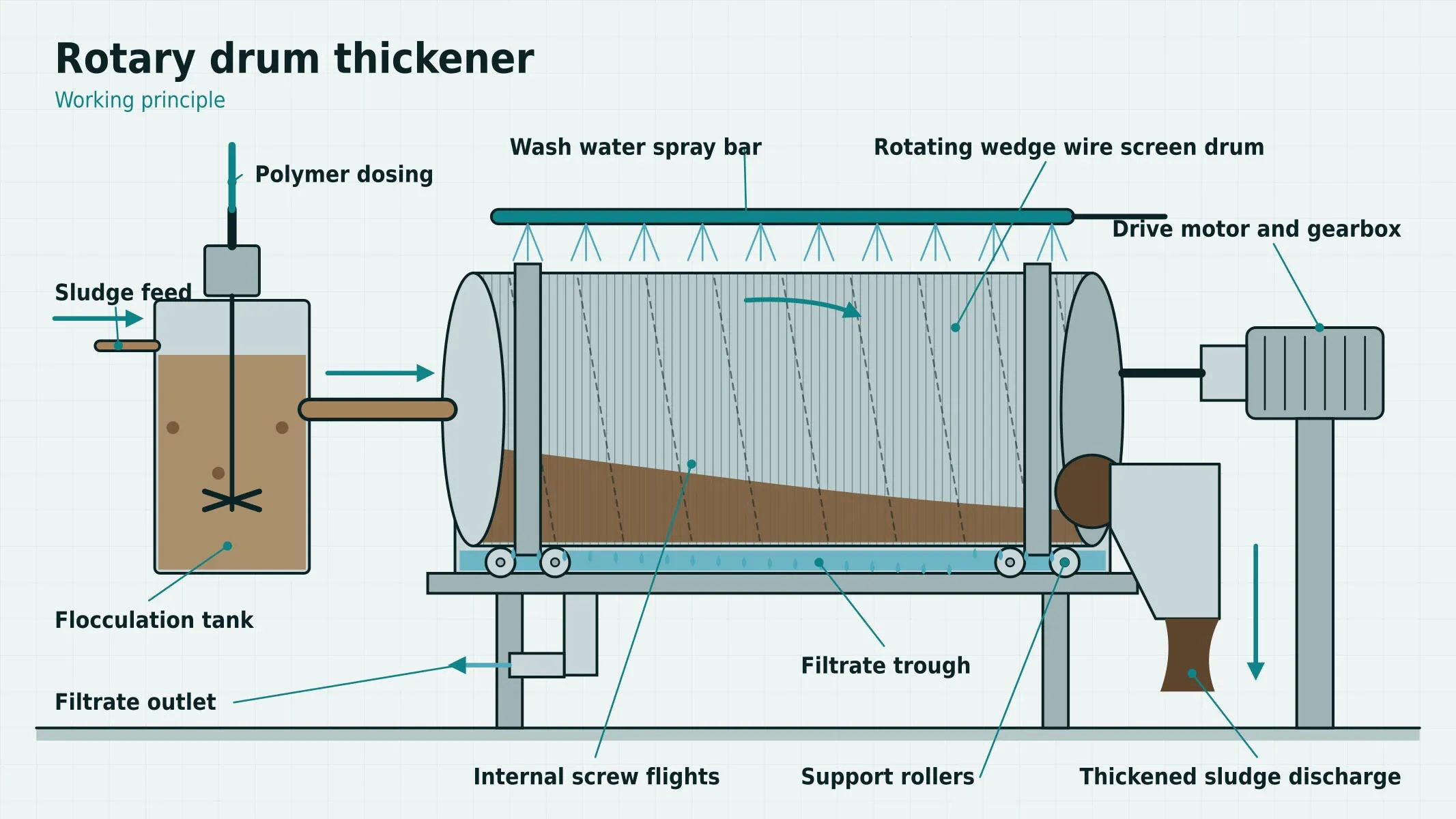
Model : KL-S1
Concentrates flocculated sludge inside an enclosed, direct drive rotating drum, draining free water through the drum screen by gravity. With no support trunnions, very low energy, polymer and wash water demand and a notably small footprint, it is a clean and economical alternative to a gravity belt thickener for small and medium plants where space and operating cost are at a premium.
The proven route to a firm, transportable cake, pressing thickened sludge between two tensioned belts through progressively higher pressure zones.
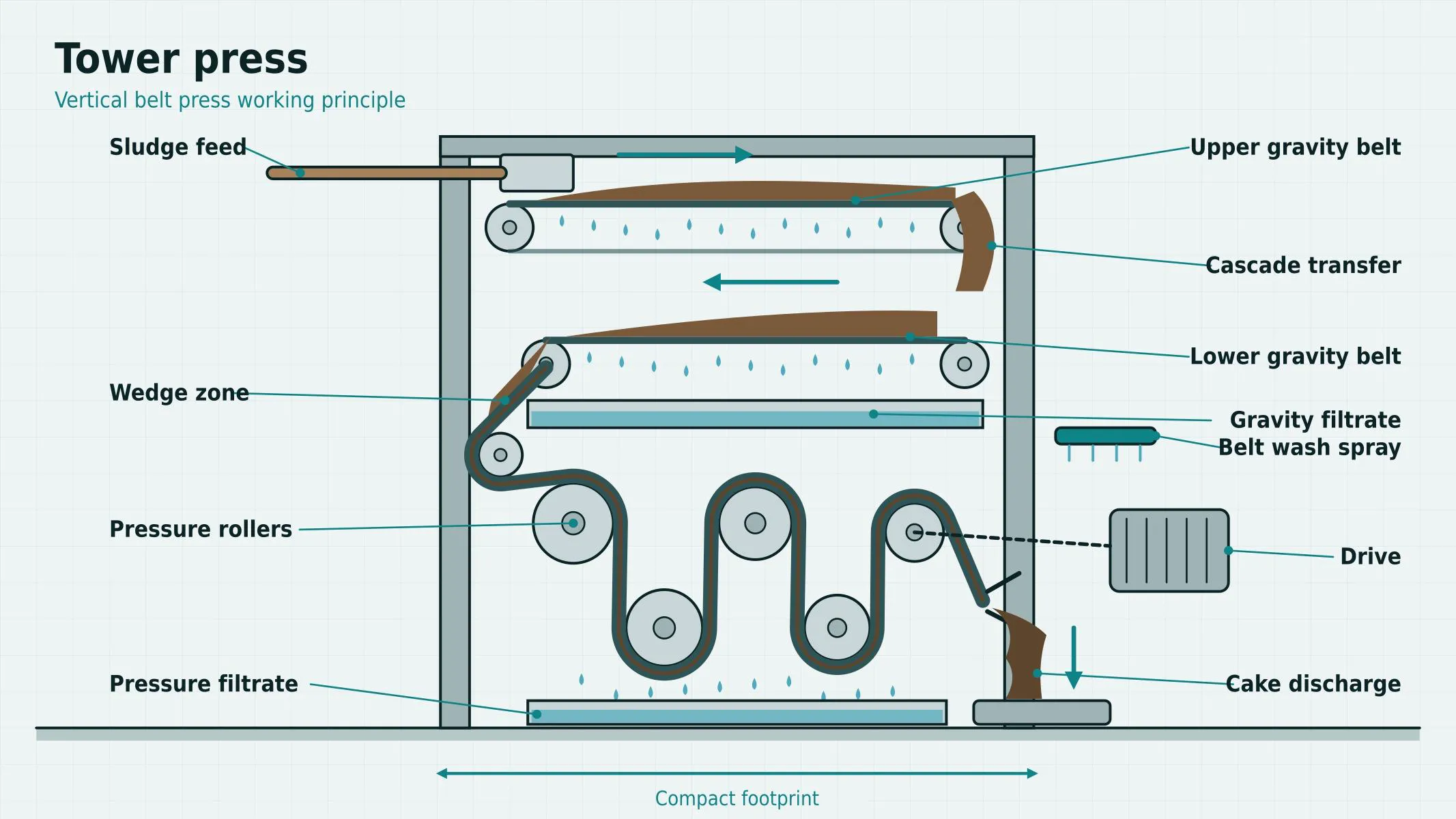
Model : KL-T
A vertical belt filter press that stacks its pressure rollers to extend retention time and lift cake dryness well above conventional horizontal designs. Belt wrap at each roller maximises pressure contact, while a stainless steel drip pan beneath every roller prevents the cake rewetting as it climbs. The eye level gravity deck removes the need for elevated platforms and catwalks. Available in varies belt widths configurations.
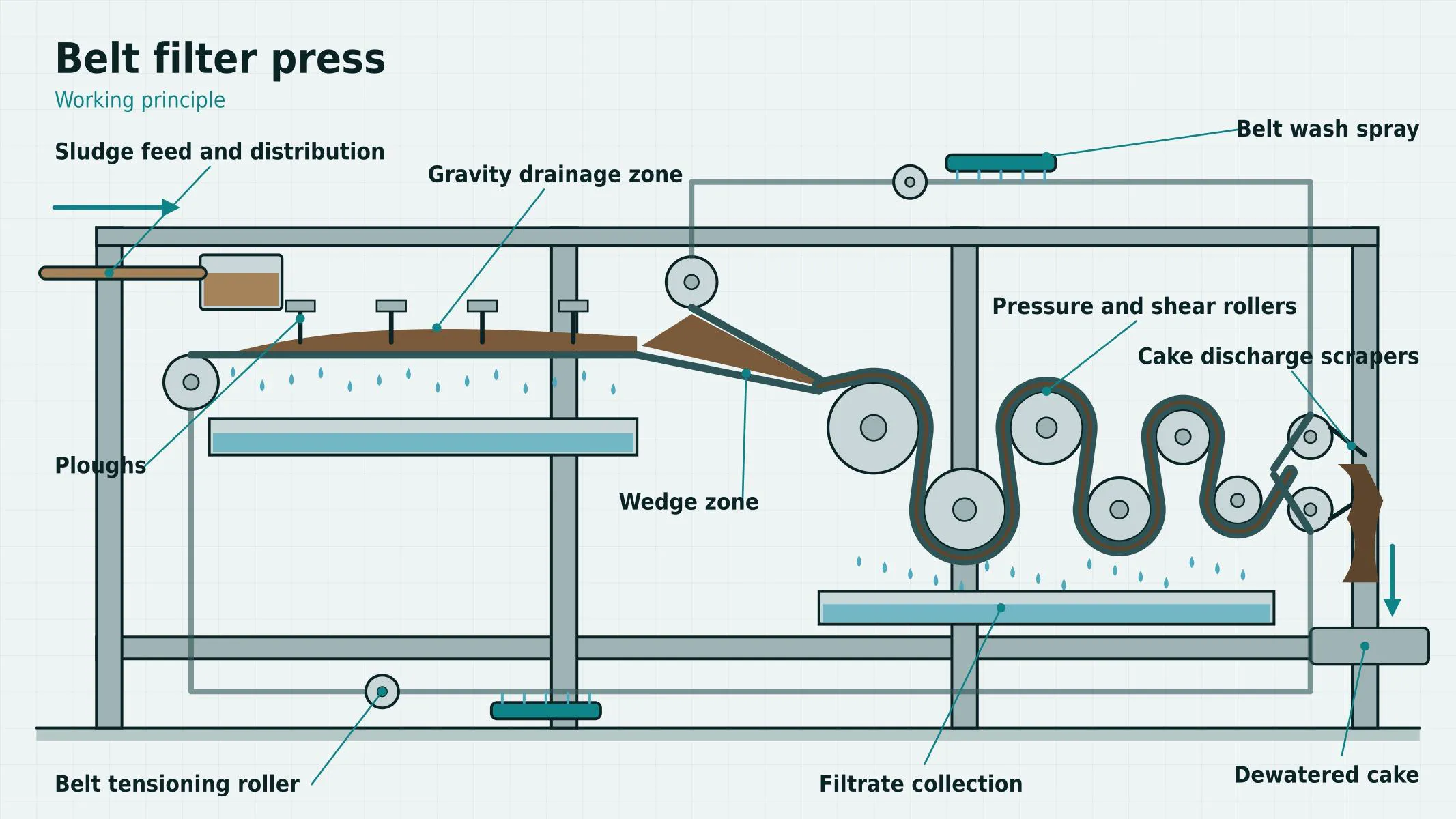
Model : KL-B
A horizontal belt filter press built for reliable, high throughput dewatering. A rigid frame, automated polymer dosing, belt cleaning and straightforward operator controls hold solids capture and water removal steady with minimal intervention, in a compact footprint. The KL-B Series is available in varies belt widths configurations.
The same engineering applied across the sectors that depend on it.
Get in touch
Share the sludge type, the feed solids and the flow, and we will recommend the thickening and pressing line to match it.